



Florida’s Comparative Fault Rule: You May Still Recover


Reviewed by Michael P. Maddux, Esq. | Board Certified Criminal Trial Lawyer | Florida Super Lawyer for 16 Consecutive Years
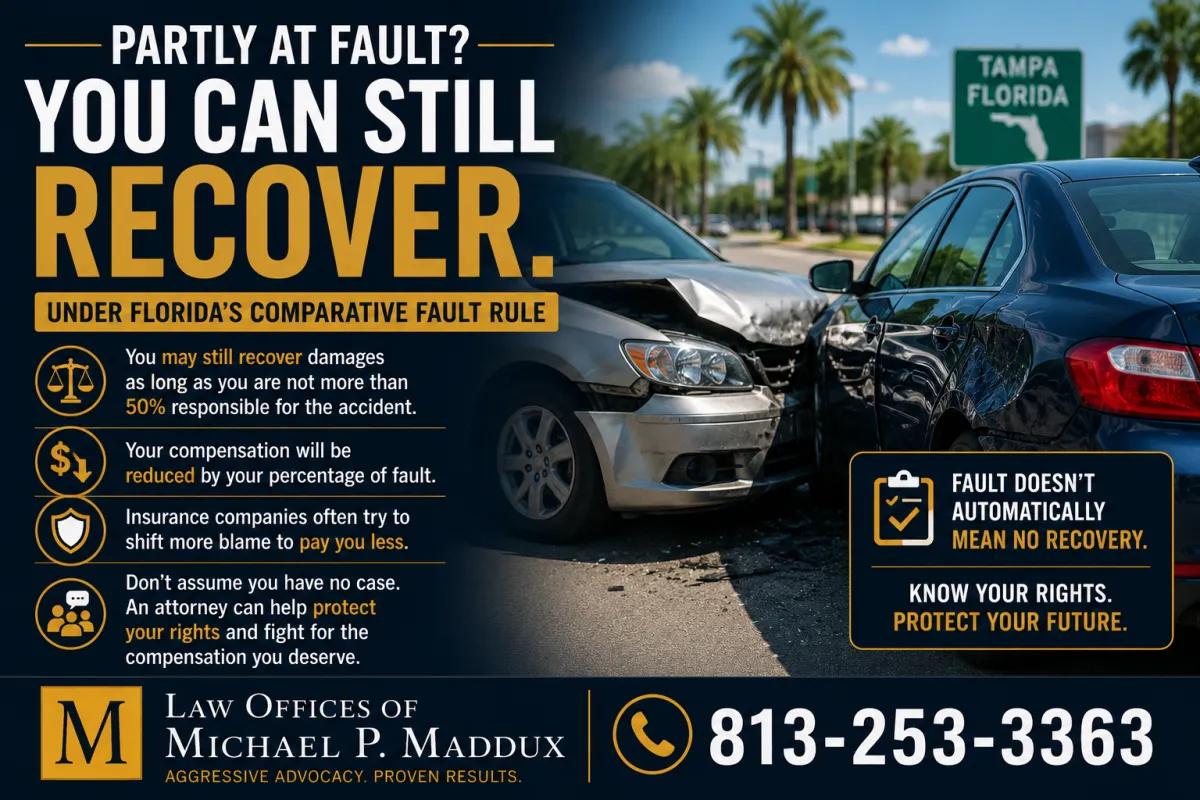
Florida’s comparative fault rule means you may still be able to recover damages even if you were partly responsible for a car accident. Many people assume otherwise, but in Florida, that’s not necessarily true.
How Florida’s Comparative Fault Rule Works
Under this rule, an injured person may still recover damages as long as they are not more than 50% responsible for the accident. However, the amount of compensation awarded will typically be reduced by the person’s percentage of fault.
Insurance companies often try to shift more blame onto the injured party to minimize what they have to pay. Because of this, determining how fault is assigned can have a major impact on the outcome of a claim.
If another person’s negligence contributed to your injuries, do not assume you have no case. Speaking with an attorney can help ensure the facts are properly evaluated and your rights are protected. If you have questions about how Florida’s comparative fault rule applies to your case, our office can help.